Walking aids: sticks, crutches, frames and rollators
Walking aids help you stay on your feet when balance, strength or an injury makes walking harder. Allcare Warehouse groups its walking aids into three sections: walking sticks, crutches, and rollators and walking frames. Each gives a different amount of support, and the right choice depends on how steady you are, how far you walk and where you use it. The guide below compares them side by side so you can narrow it down before you call or visit.
Why we don't display Prices ?
In this competitive market, we do the research on your behalf for the best prices and stock availability from different suppliers. Our product sourcing team is on constant lookout for the best deals from our suppliers, and we pass these great discounts on to you.
As a rough guide, the more support someone needs, the wider the base of the aid they use.
Walking sticks and quad sticks
A walking stick suits someone who walks fairly steadily but wants something to lean on. Our walking sticks range includes adjustable aluminium sticks, folding sticks and timber canes. A quad stick has four small feet, giving a wider base than a single tip while still being held in one hand.
Crutches
Crutches are usually used in pairs, often while an injured leg recovers. Forearm crutches, with a cuff that sits around the forearm, make up most of the range, alongside underarm crutches and children's sizes from Rebotec, Coopers and Care Quip.
Rollators and walking frames
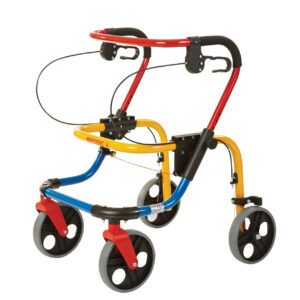
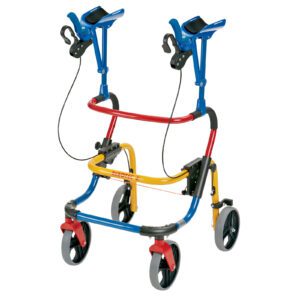
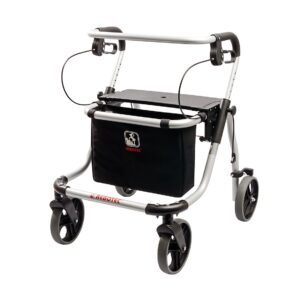
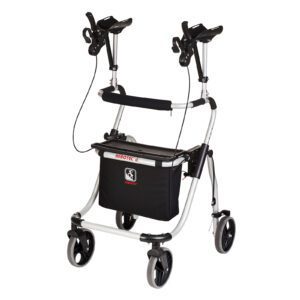
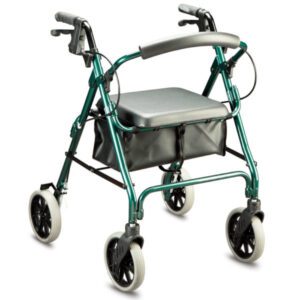
A walking frame is lifted or slid forward with each step and gives the widest, steadiest base of the three. A rollator has wheels, hand brakes and usually a seat, so it suits people who walk further but need to stop and rest. Both sit in rollators and walking frames, along with forearm platform walkers and knee walkers. Our comparison of walking frame vs rollator goes through the trade-offs in detail.
Walking aids for elderly people
Older people often move from a stick to a frame or rollator as their needs change. Things worth checking:
whether it adjusts to the user's height
whether it folds to fit in the car
how heavy it is to lift
whether the handles and brakes are easy to grip
Healthdirect notes that a healthcare professional can assess your mobility needs and suggest a suitable aid, so ask your GP or physiotherapist before you choose. Our article on the best walking aids for older people has more ideas.
Using NDIS funding
The National Disability Insurance Scheme (NDIS) lists walking sticks and four-wheeled walker frames among its examples of low-cost assistive technology. Whether an item is funded depends on the participant's plan and the National Disability Insurance Agency (NDIA), not on Allcare Warehouse. We supply participants with self-managed, plan-managed and NDIA-managed plans, and our NDIS hub explains the steps. For wheelchairs and scooters, go back to the full mobility aids range.
Frequently asked questions
How do I set the height of a walking aid?
Most of our sticks, crutches and frames adjust in height. A method given in several of our product descriptions is to stand straight in your usual shoes with your arms relaxed and measure from the floor to the crease of your wrist. A physiotherapist can confirm the right setting for you.
Can I see the range in store?
Yes. You can see a selection of sticks, crutches and rollators at our Liverpool showroom, Shop 7 inside Northumberland Arcade, 230 Northumberland Street. The display changes, so call 1300 767 777 before you come in if you want to look at a particular stick, crutch or rollator.
Do you have crutches and walkers for children?
Yes. The crutches section includes Rebotec children's models such as the Fun-Kids, Safe-In-Kids and Quadro Fun-Kids. In rollators and walking frames, the Rebotec Fox & Fixi child walker and the Fox & Fixi YANO forearm walker are designed for kids.
Can walking aids for elderly relatives be delivered?
Yes. We deliver Sydney wide, so an order can go straight to a parent's or grandparent's home. Freight delivery can be arranged within NSW. Call 1300 767 777 with the item and the delivery suburb and we will confirm the options.
Shopping Cart
We use cookies to understand how this site is used and to improve it.
Privacy policy