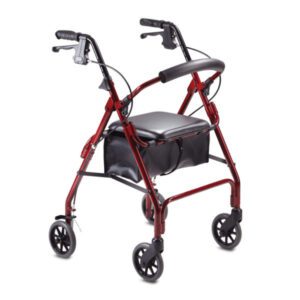
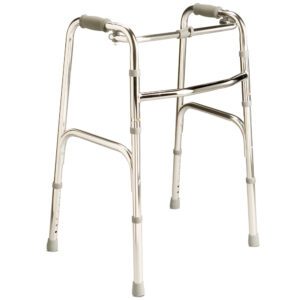
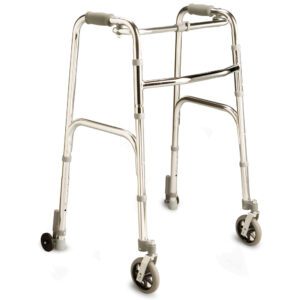
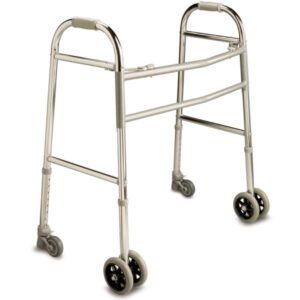
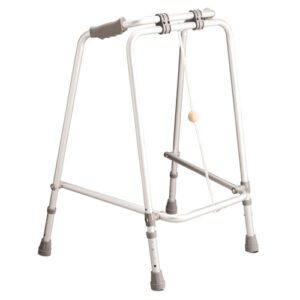
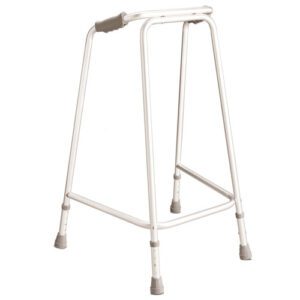
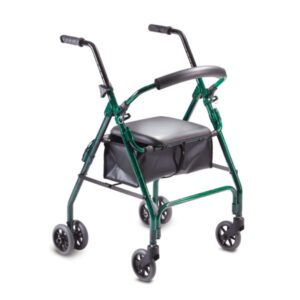
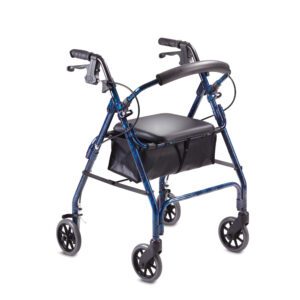
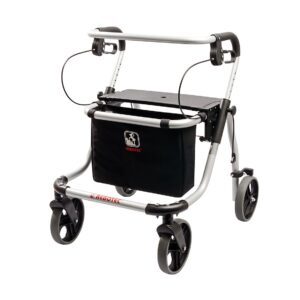
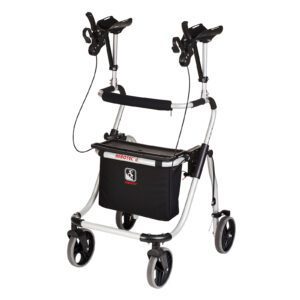
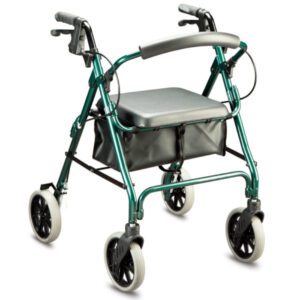
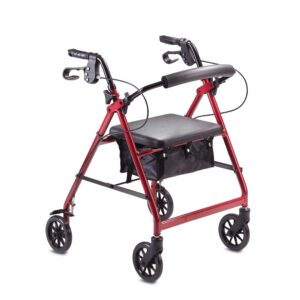
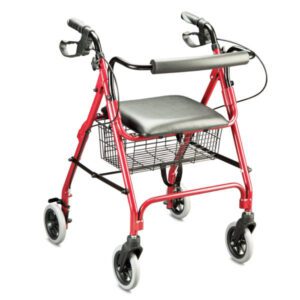
A rollator is a wheeled walker with hand brakes, and most have a seat, so you can walk further and stop to rest when you need to. A walking frame has no seat and is lifted or slid forward with each step, giving a steady base around you. Allcare Warehouse stocks both, along with forearm platform walkers, knee walkers and walkers for children. This page explains the differences so you can narrow down the right rollator or frame for home or outdoors.
Why we don't display Prices ?
In this competitive market, we do the research on your behalf for the best prices and stock availability from different suppliers. Our product sourcing team is on constant lookout for the best deals from our suppliers, and we pass these great discounts on to you.
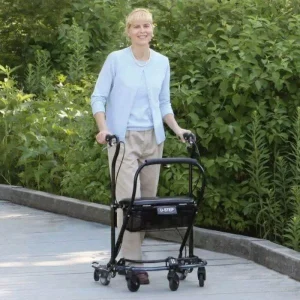
Our seated rollators include the Scout, Voyager, Adventurer, Explorer, Cruiser and Territory, plus the Rebotec Polo Plus-T. Points to compare:
Seat width: the Scout and Voyager have 350 mm seats, while the Adventurer, Explorer and Cruiser have 310 mm seats.
Weight: the Territory is 5.9 kg, the lightest listed weight among these, which matters if you lift it into a car often.
Wheels: the Scout has large 8 inch castors for outdoor paths.
Brakes: most have handbrakes that lock for stability, while the Cruiser uses a push down brake system.
Storage: several fold with the vinyl bag still attached, the Voyager comes with a basket, and the Polo Plus-T has a reversible seat that doubles as a tray.
Walking frame options
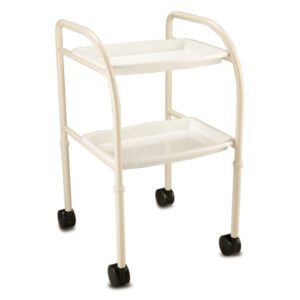
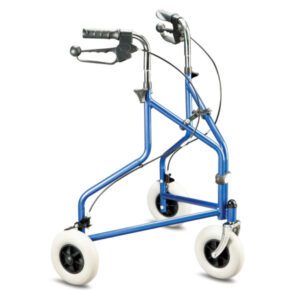
The Care Quip and Coopers walking frames are height adjustable and come in folding and non-folding styles, with or without front wheels. Wheels let you push the frame along rather than lift it each step. The Care Quip Heavy Duty frame is wider and rated to 200 kg. For indoor use, the Mobile Tray Walker has two removable trays for carrying small household items, and the Tri Wheel Walker is a folding three-wheel option with large solid castors. Add a tray or bag from mobility accessories. If you are still deciding, our guide comparing a walking frame vs rollator sets out the pros and cons.
Forearm walker and specialist walkers
Forearm platform walker
A forearm walker lets you lean on padded forearm rests instead of your hands. The Rebotec Polo YANO has height-adjustable armrests, dual-action hand brakes and a folding frame, and its maker describes it as suited to people with limited hand, arm and wrist strength.
Knee walker
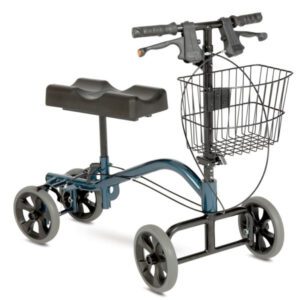
The Knee Walker supports the shin of the injured leg on a padded platform while the other foot pushes along. It is designed for foot or ankle injuries where you cannot put weight on the affected area, and its maker presents it as a short-term alternative to crutches.
U-Step Walker 2 and kids walkers
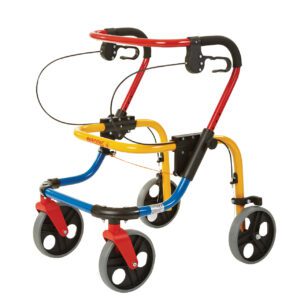
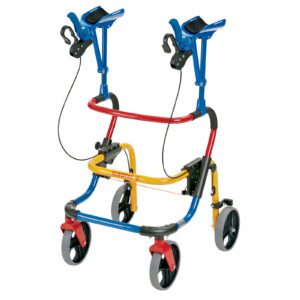
The U-Step Walker 2 has a U-shaped base, reverse braking and a small turning circle. For children, the Rebotec Fox & Fixi rollator and the Fox & Fixi YANO forearm walker have puncture-proof tyres and dual brakes.
Funding and how to buy
The National Disability Insurance Scheme (NDIS) lists four-wheeled walker frames among its examples of low-cost assistive technology, but funding depends on your plan. Our NDIS hub explains the process. For sticks and crutches, see all walking aids.
Frequently asked questions
What height should a rollator be?
The Polo Plus-T product guide suggests standing up straight in your shoes and having someone measure from the crease of your wrist to the ground. That measurement is roughly the handle height to look for. All our seated rollators have height adjustable handles, and a physiotherapist can check the setting.
Do rollators fold for the car?
Yes. All the seated rollators in this range fold for storage and transport, and the Scout, Adventurer, Explorer, Territory and Cruiser can be folded with the vinyl bag still attached. Check the listed weight if you will be lifting it into a boot yourself.
Can I see rollators and walking frames before buying?
Yes. A selection is on display at our Liverpool showroom inside Northumberland Arcade, 230 Northumberland Street. The display changes, so call 1300 767 777 first if you want to look at a particular rollator or walking frame.
Shopping Cart
We use cookies to understand how this site is used and to improve it.
Privacy policy