

Bedroom aids for elderly people solve the small, repeated problems that make bedtime harder with age: sitting up, rolling over, getting out of bed, reaching the toilet at night and staying comfortable for hours at a time. The bedroom is worth getting right because it is where a person is often tired, half awake and moving in the dark. Healthdirect’s falls information notes that one in 4 people aged 65 and over have at least one fall a year, and that around half of all falls happen in and around the home. This guide goes through the main types of bedroom aid, what each one is for and what to check before choosing.
Why the bedroom is a common trouble spot
Most bedroom difficulties happen at the edges of sleep. Healthdirect’s falls advice suggests standing up slowly after lying down or sitting, to avoid posture-related dizziness, and leaving hallway lights on at night. It also notes that people can fall while hurrying to the toilet. A good set of bedroom aids targets those moments: a firm handhold beside the bed, a safer way to manage toileting overnight, and support to sit and reposition without straining.
Aids for getting in and out of bed
The bedroom aids range covers several ways to give a person something solid to push or pull on:
- Bed sticks and rails, such as the Bed Stick Cobra and Bed Rail Hook Type, slide between the mattress and the bed base and give a support rail for turning, repositioning and transfers.
- The Smart Rail swings outward once lifted, so the handhold sits where the person stands up, and it is height adjustable in the locked position.
- The Rope Ladder Bed Hoist ties around the bed legs, letting the user pull themselves from lying to sitting one rung at a time.
- An Overbed Frame stands on its own and holds a height-adjustable handle on a chain or strap above the bed.
- Bed raisers lift a bed that is too low to stand up from. The Blox Bed Raisers come as a set of 4, add 140mm and are rated to 380kg per set.
The bed accessories range adds rails for home care beds, such as the U-Assist Side Rail with several grab points and the Icare Extendable Side Rail, which retracts so the person can get in and out.
Rails and poles carry risks of their own. On the NDIS list of higher-risk items, bed rails appear as equipment that restricts voluntary movement, and bed poles are named as a low-cost item that is still higher risk; participants need written advice to buy either. Whatever the funding, it is sensible to have a GP, physiotherapist or occupational therapist look at how the person moves before adding a rail.
Sitting up and changing position
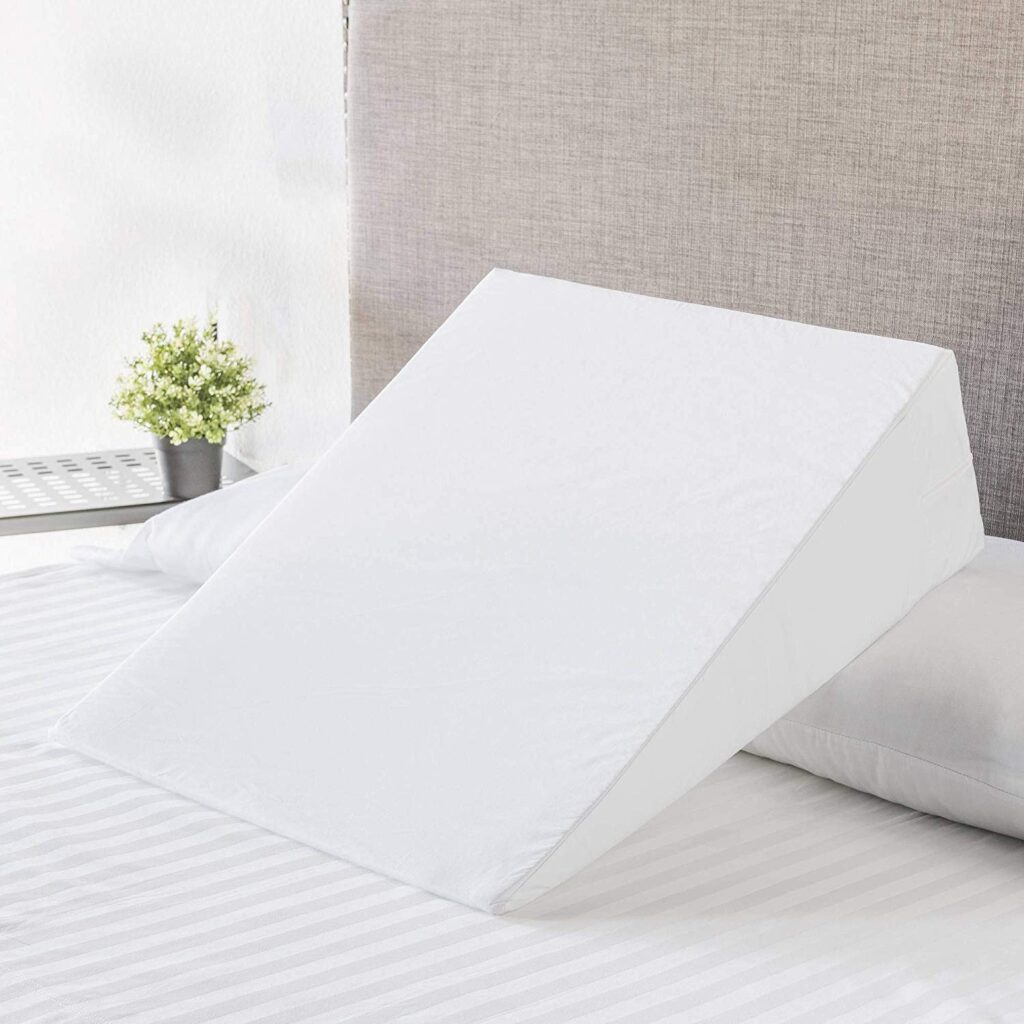
Lying flat all night is uncomfortable for many older people, and sitting up in bed to eat or read needs proper support behind the back. The Adjustable Backrest has an aluminium frame with a breathable nylon back and a ratchet that sets the angle. The Bed Sitta is an armchair-shaped foam support with armrests, and the Bed Wedge turns to give a 15° or 75° recline.
Position matters for skin as well as comfort. Healthdirect advises moving or changing position in bed often to prevent pressure sores, and asking a carer for help if needed. Curera Support Wedges hold a person in a semi-side-lying position, and the pillows and cushions range adds knee cushions, lumbar rolls and contoured pillows for positioning. If skin is already at risk, look at the surface underneath too: the mattresses range includes pressure care options, and our pressure injury guide explains the choices.
Night-time toileting without the walk
When the trip to the bathroom is the riskiest part of the night, bringing the toilet closer helps. Male and female urinals hold 1 litre with 100ml markings, and the male Spil-Pruf urinal has a spout that does not spill in any position; a female adaptor converts it for women. A Urinal Bottle Holder clips to the bed frame or rail to keep the urinal upright, and the Slipper Bed Pan has a wedge shape and a front panel to stop spills when it is carried away.
For someone who can stand and pivot but not walk far, a bedside commode from the commodes range puts a seat beside the bed. Waterproof bed protection from the bedroom incontinence range keeps the mattress dry if accidents happen.
Reducing harm if someone leaves the bed
Some people get up without warning, especially if they are confused at night. Falls prevention alarms alert a carer when the person leaves the bed or chair, or sits up in bed; they sit in the falls prevention range. A Crash Mat lies beside the bed: it is 1750mm long and 50mm thick, firm enough to walk on, with a slip-resistant underside and a reflective edge for night-time visibility.
Where rails are in use, padding stops arms and legs slipping between the bars. Bed Rail Protectors, Two Bar Bumpers, Side Rail Wedges and the Ultra Safe Cocoon are made from soft medical grade foam for this purpose.
Everyday comfort in bed
An overbed table brings meals, drinks, books or a tablet within reach without leaning out of bed. The overbed tables range includes height-adjustable models, several with a tilting top and some that fit over a chair as well. A blanket support tucks under the mattress and lifts linen off sensitive feet and legs.
When the bed itself needs to change
Add-on aids work best on a bed that is roughly the right height and firm at the edge. If sitting up, turning and standing are still hard with them in place, or a carer is bending over a low mattress several times a day, an adjustable bed may be the better answer. The beds range covers home care beds, and our home care bed guide compares them with a standard bed.
Questions to answer before choosing
- Which moment is hardest: sitting up, rolling, standing, toileting or settling back down?
- Does the person manage alone, or does someone help, and at what times?
- What bed is it? Aids that slide between the mattress and base suit some beds better than others, and some Icare rails are made for Icare beds.
- Is there floor space beside the bed for a commode, frame or mat?
- Has a health professional checked the plan, especially for rails, poles or bed sticks?
The full bedroom range brings these together in one place.
Frequently Asked Questions
How do I stop pillows sliding down on a profiling bed?
When the back section of a profiling bed rises, pillows tend to slip down behind the person. Pillow Suspenders, sold as a pair, fold back around a metal rail on the mattress platform, secure with hook and loop, and fasten to the pillow or pillowcase with a metal clasp. They are listed as suitable for all pillows, so the person’s own pillow can stay in use.
How are urinals and bed pans cleaned?
Several are described as autoclavable for sanitising, including the Slipper Bed Pan, the male Spil-Pruf urinal and the standard female urinal. On the Spil-Pruf, the spout unscrews for emptying and cleaning. At home, follow the care instructions that come with each item, and keep a second urinal on hand so one can be cleaned while the other is in use.
Can a family member order bedroom aids for someone else?
Yes. Allcare Warehouse takes orders by phone, by email at [email protected] or in person at the Liverpool showroom, so a son, daughter or carer can arrange everything. Delivery covers Sydney, with freight available within NSW. Have the bed type and the person’s needs ready, and ask about collection from the Croydon Park store if that is closer.
To talk through bedroom aids for a parent or partner, call Allcare Warehouse on 1300 767 777 or come into the Liverpool showroom in Northumberland Arcade.
This guide is general information, not medical advice. Read our disclaimer.