

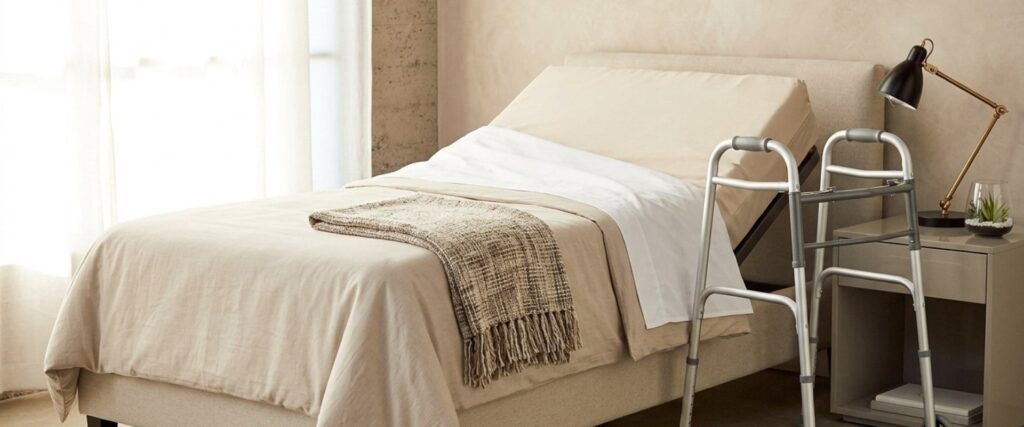
A 5-zone mattress is a support surface built with five distinct sections running from head to foot, each engineered to a different firmness so the body is supported where it needs firmness and cushioned where it needs give. Rather than one uniform layer of foam or fibre, the surface is divided so the shoulders and calves sink slightly for comfort while the heavier midsection, particularly around the hips and lower back, gets firmer support to stop the body sinking too deep and losing spinal alignment. For someone spending long hours in bed, that difference in zone-by-zone firmness is what separates a mattress that simply feels soft from one that actually helps spread body weight more evenly across the surface.
The underlying idea is pressure redistribution: concentrated weight at bony points like the heels, sacrum, elbows and shoulder blades is spread across a wider surface area, reducing the intensity of pressure at any single point. This matters most for people with reduced mobility who cannot easily reposition themselves through the night, including many NDIS participants and older Australians ageing in place with the support of family carers.
Key Takeaways
- A 5-zone mattress divides the sleep surface into five firmness sections, matched to the shoulders, back, pelvis, thighs and calves.
- The firmer central zones support the heavier pelvic and lumbar area, while softer zones at the shoulders and lower legs reduce point pressure.
- Zoned support helps spread body weight more evenly, which is a key consideration for people who spend extended periods in bed.
- Choosing the right pressure care mattress depends on individual mobility, skin integrity and medical advice, not a single generic recommendation.
- Allcare Warehouse is an NDIS-registered supplier and can be contacted to discuss the current pressure care mattress range for home care.
Why Pressure Redistribution Matters for People With Limited Mobility
Anyone who spends most of the day or night in one position, whether in bed or in a chair, is carrying sustained pressure on the same few points of skin and tissue. When someone can shift their own weight easily, that pressure is temporary and self-correcting. For a person with limited mobility, whether due to a spinal cord injury, advanced age, neurological condition or post-surgical recovery, that natural repositioning may not happen often enough on its own. Sustained, unrelieved pressure over bony areas such as the heels, sacrum, hips and shoulder blades is a recognised risk factor for skin breakdown, which is why pressure care equipment is such a significant category within disability and home care equipment more broadly.
A well-designed pressure care surface does not remove the need for repositioning, careful skin checks or a broader care plan set by a treating clinician. What it does is work alongside that care plan, reducing peak pressure at vulnerable points and supporting better weight distribution across the whole body. This is why occupational therapists and other allied health professionals are often involved in recommending the right type of surface for an individual’s specific needs, rather than a single mattress being suitable for everyone.
The 5 Zone Mattress Explained: Head to Heel
The exact configuration varies between manufacturers, but the general logic behind a 5-zone mattress design follows the shape and weight distribution of the human body when lying supine:
- Zone 1 – head and shoulders: Typically softer, allowing the shoulders to settle into the surface rather than being pushed upwards, which helps keep the spine in a more neutral line.
- Zone 2 – upper back: A transitional firmness that supports the shoulder blades without creating a hard edge against Zone 1.
- Zone 3 – pelvis and lower back: Usually the firmest zone, because the hips and sacrum carry the greatest proportion of body weight when lying down. Extra firmness here helps prevent excessive sinking that can throw out spinal alignment and concentrate pressure on the sacrum.
- Zone 4 – thighs: A medium-firm zone that bridges the firmer pelvic support and the softer lower-leg zone.
- Zone 5 – calves and heels: Softer again, since the heels are a common site of pressure injury and benefit from additional cushioning and reduced point contact.
This zoned approach is different to a single-density foam mattress, which offers the same firmness across the whole body regardless of where weight is actually concentrated. It is also a different mechanism to alternating-pressure air mattresses, which actively change pressure over time using an electric pump rather than relying on fixed foam zones. Some pressure care products combine zoned foam bases with removable pressure care cushion inserts for additional targeted support; anyone weighing up which approach suits their situation is welcome to discuss the current range with the team at Allcare Warehouse.
A 5-zone mattress does not soften the whole bed evenly – it firms up exactly where the body needs support and softens exactly where it needs relief.
Choosing the Right Pressure Care Mattress for Home Care or NDIS Support
Selecting a pressure care mattress is rarely a one-size-fits-all decision. Factors that influence the right choice include the person’s level of mobility and ability to reposition independently, their current skin integrity, whether they use a hospital-style care bed or a standard bed frame, and any existing pressure injuries or risk factors identified by a GP, occupational therapist or wound care specialist. A 5-zone mattress is one option among a broader category of pressure care products, which can also include specialised cushions, overlays and positioning equipment designed to work together as part of a complete pressure management plan.
For NDIS participants, mattress and bedroom equipment needs are generally considered alongside broader home care and mobility equipment requirements identified in an individual’s plan. Funding, eligibility and the specific approval pathway depend on the participant’s plan and circumstances, and are determined by the NDIA or the participant’s plan manager rather than by any equipment supplier. Allcare Warehouse can help participants, families, plan managers and support coordinators understand what is currently available, but a clinician’s assessment remains the appropriate basis for a personalised recommendation. Families exploring options can browse the current range of pressure care and bedroom aids or get in touch to discuss what might suit their situation.
If you are comparing a 5-zone mattress against other pressure care options, it can help to think about the setting it will be used in. A mattress intended for a standard home bed will differ from one designed to sit on an adjustable care bed, and features such as mattress depth, cover material and compatibility with bed rails are all practical details worth checking before deciding. This is exactly the kind of detail worth raising directly, since specifications can change as new stock arrives.
If your family is still working through which pressure care setup fits your situation, a good next step is a conversation with our team about what is currently available and how it might fit alongside your existing bed and other home care equipment – no pressure, no obligation, just a chance to ask questions and get clear information.
Choosing a Pressure Care Mattress?
Call the Allcare Warehouse team on 1300 767 777 to ask about the current pressure care mattress range.
Caring for and Maintaining a Pressure Care Mattress
Like any piece of home care equipment, a pressure care mattress performs best when it is looked after correctly. Covers should be kept clean and dry in line with the manufacturer’s instructions, since moisture trapped against the skin can undermine the benefits of a well-designed zoned surface. Regularly checking that the mattress cover is fitted correctly, without folds or bunching, also helps the zones do their job as intended, since a poorly fitted cover can flatten the differences between firmer and softer sections. Families and carers should also keep an eye on general wear over time, as foam and other support materials can lose some of their original firmness with years of use, which may eventually affect how evenly weight is distributed.
Combining a 5-zone mattress with a broader daily care routine, including regular repositioning where appropriate, skin checks, and use of complementary aids such as bedroom safety and positioning equipment, gives the best chance of maintaining comfort and skin integrity over time. If you are ever unsure whether a mattress is still performing as it should, that is a good prompt to speak with a treating clinician or contact the supplier for guidance.
Our range includes the Optimal 5zon, a static pressure care mattress with a zone and module system, and the Optimal 5zon Plus, which uses high resilience foam to suit bariatric clients.
Frequently Asked Questions
What makes a 5-zone mattress different from a standard mattress?
A standard mattress typically uses one consistent level of firmness across its entire surface. A 5-zone mattress is divided into five sections of varying firmness, matched broadly to the shoulders, upper back, pelvis, thighs and calves, so that heavier areas of the body receive firmer support and lighter contact points receive more cushioning.
Is a 5-zone mattress suitable for someone with a pressure injury?
This depends entirely on the individual’s specific condition, mobility and the advice of their treating clinician or wound care specialist. Some pressure injuries require specialised pressure-relieving or pressure-redistributing surfaces beyond a standard zoned foam mattress. A GP, occupational therapist or wound care nurse is best placed to recommend the right type of surface for a specific injury.
Can a 5-zone mattress be used with a home care bed?
Many pressure care mattresses are designed to be compatible with adjustable care beds as well as standard bed frames, but compatibility depends on the specific mattress and bed model. It’s worth checking mattress dimensions and depth against your bed frame, or asking the supplier directly, before finalising a choice.
Does NDIS funding cover a 5-zone mattress?
Whether a mattress is funded through an NDIS plan depends on the individual participant’s plan, goals and the assessed need identified by their planning process. Funding decisions are made by the NDIA or the participant’s plan manager, not by an equipment supplier. Allcare Warehouse can help explain what is currently available, but cannot confirm funding eligibility on a participant’s behalf.
How do I know which pressure care mattress is right for my situation?
The right choice depends on factors including mobility level, existing skin integrity, bed type and any current pressure injury risk. These are best assessed with input from a GP, occupational therapist or other relevant health professional, who can then guide the choice of mattress type, firmness and any additional pressure care products needed alongside it.
Where can I see the current range of pressure care mattresses?
You can browse the current range on the Allcare Warehouse website, visit the Liverpool showroom at Shop 7 inside Northumberland Arcade, 230 Northumberland Street, Liverpool NSW 2170, or contact the team directly to ask about current stock and specifications before requesting a quote.
Supporting Comfort and Care at Home
Choosing the right pressure care mattress is one part of a much bigger picture: supporting someone to stay comfortable, safe and as independent as possible in their own home. A 5-zone mattress reflects a simple but well-considered idea that the body is not evenly shaped or evenly weighted, so a support surface designed with that in mind can genuinely help spread pressure more sensibly than a uniform one.
Getting the details right, from the right zone configuration to the right cover, bed compatibility and care routine, makes a real difference over time. It is also never a decision to make in isolation from a person’s broader care needs, mobility goals and any advice already given by their treating team.
For families, carers and NDIS participants trying to work out what fits their situation, having a supplier who can talk through the practical details, rather than just list specifications, tends to make the process far less overwhelming.
Related services
Visit Allcare Warehouse Today
Visit our Liverpool showroom or call 1300 767 777 to ask about pressure care mattresses and bedroom aids.
This guide is general information, not medical advice. Read our disclaimer.