

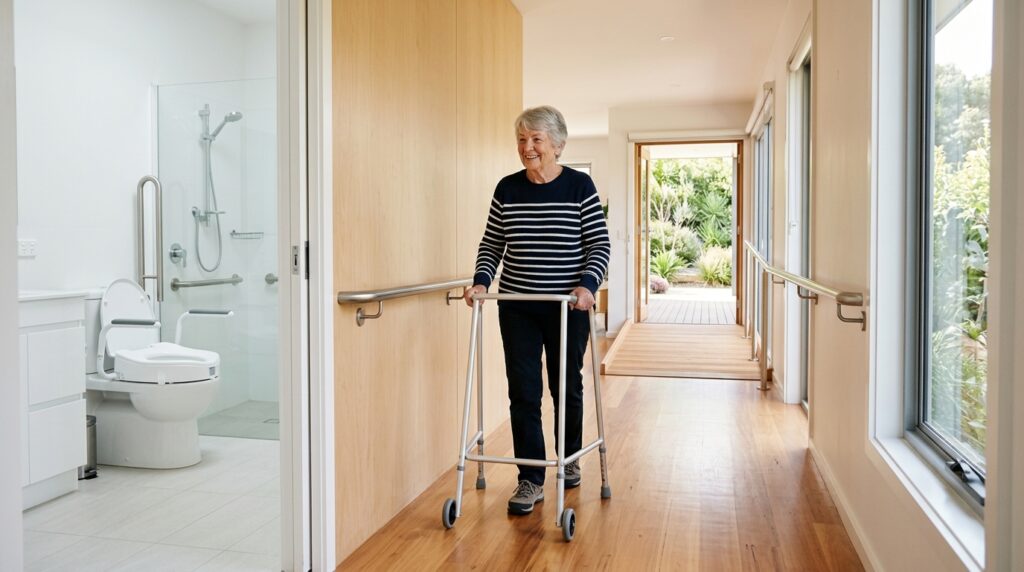
Assistive devices for elderly people, and for anyone living with disability, do one job: they make an everyday task possible, easier or safer. The need is large. The World Health Organization’s assistive technology fact sheet says more than 2.5 billion people worldwide need one or more assistive products, and that most people who use assistive technology use more than one product. This guide covers the devices that make the biggest difference at home, grouped by the task they help with, and how to get advice and funding before you buy.
What counts as an assistive device
WHO describes assistive products as anything that helps maintain or improve a person’s functioning in cognition, communication, hearing, mobility, self-care and vision. That takes in simple items as well as complex ones. The NDIS explanation of assistive technology gives non-slip mats, adaptable knives and forks, wheelchairs, powered adjustable beds and a communication device controlled with the eyes as examples. According to WHO, the people who most need it are older people, children and adults with disabilities, and people with long-term health conditions such as diabetes, stroke and dementia.
Must-have devices, by task
Walking and getting around
Walking sticks give a point of support for balance, and quad sticks add a four-legged base; several quad sticks have a handle and stem that rotate for left or right hand use. Rollators suit people who need more support or somewhere to sit and rest: the Scout Walker has height adjustable handles, handbrakes that lock and a padded seat. For longer distances, the manual wheelchairs range includes a one arm drive model with dual pushrims on one side and heavy duty frames for the bariatric client. Portable wheelchair ramps then deal with the step at the front door.
Showering, bathing and the toilet
The bathroom is often where a household first needs equipment. Shower chairs let a person sit to wash. Bath boards rest across the bath so the user can sit first and then swing their legs over, and the Kingfisher model comes with its own removable grab rail. At the toilet, over toilet aids raise the seat and give the person arms to push up from. Our guide to choosing bathroom aids works through each task in more detail.
Beds, chairs and standing up
For many older people, getting up is harder than walking. Bedroom aids such as the Bed Stick Cobra and the Smart Rail give a firm handhold beside the bed. In the lounge room, Healthdirect’s mobility aids guide notes that electric recliner chairs help you sit down and get up more easily, and the lift chairs range includes single and dual motor models.
Eating, dressing and daily tasks
Small aids solve daily frustrations. The eating and kitchen aids range covers the Reflex Cutlery Range, jar and bottle openers and kettle tippers. Dressing aids include a button hook for one-handed dressing and a leg lifter for moving an immobile leg, while household aids include a sheet magnifier for large areas of print. Pill organisers with morning and evening compartments help keep a week of tablets in order.
Alerts and staying connected
For someone who lives alone or gets up at night, alerts matter. The falls prevention range includes alarms that alert a carer when someone gets out of bed or a chair, or sits up. The Spacetalk Life wearable combines SOS, fall detection, GPS location and a 4G phone, and it needs its own SIM card and app subscription.
Hearing and vision
Hearing aids are not an off-the-shelf purchase. Healthdirect’s page on hearing aids says a hearing aid should be programmed by an audiologist to match your type of hearing loss, and that eligible people can get free or subsidised hearing aids through the Australian Government Hearing Services Program. A hearing test is the place to start.
Getting advice before you buy
An occupational therapist is often the best first call. Healthdirect’s page on occupational therapy says an OT can help you find and use equipment to maintain your independence, and help with home modifications. For NDIS participants, the line between everyday items and higher-risk equipment matters: transfer aids such as bed sticks, along with adjustable beds and complex bathing and toileting devices, need written advice first. Our guide to OT assessments covers when NDIS equipment needs one.
Funding equipment for people with disability and older Australians
The NDIS funds reasonable and necessary assistive technology, and bases each decision on your disability-specific needs, your goals, the evidence for the item and whether another source should fund it. As a registered NDIS provider, Allcare Warehouse can supply participants directly, and our NDIS page explains how ordering works with a plan.
Older Australians go through My Aged Care instead. Under the AT-HM scheme, funding comes in three tiers, low (up to $500), medium (up to $2,000) and high (up to $15,000, with higher amounts for assistive technology possible with evidence), each with a 12 month access period. The aged care assessment identifies whether you need assistive technology, home modifications or both, and our aged care funding page sets out the options.
Frequently Asked Questions
Do I need a prescription for assistive devices?
Many everyday devices, such as walking sticks or modified cutlery, do not need one. Under the AT-HM scheme, My Aged Care says your provider supplies products that do not require a prescription, and arranges an assessment from a suitably qualified health professional, such as an occupational therapist, for equipment that does. NDIS rules depend on the item’s risk level.
Can I rent a device instead of buying it?
Often, yes. My Aged Care says you can buy, rent or loan assistive technology, and the NDIS points out that renting can suit people whose needs could shift. Allcare Warehouse sells equipment rather than hiring it, so for a short-term need ask your aged care provider, plan manager or support coordinator about rental options.
Can devices be delivered to a parent’s home?
Yes. Delivery covers Sydney, freight is available within NSW, and any item marked as available for delivery can be sent to the rest of Australia. When you order by phone or email at [email protected], give the delivery address and the name of someone who will be home to receive the items.
The quickest way to narrow the list is to write down the three tasks that are hardest today and bring that list to the Liverpool showroom, where the team can show you what suits each one. You can also call 1300 767 777 to talk it through by phone.
This guide is general information, not medical advice. Read our disclaimer.