

This shower chair buying guide starts with the person who will sit on the seat: how steady they are, whether they need help to stand, and whether toileting is part of the routine. Below, we compare stools, chairs, commodes and bath seats, set out the sizes worth checking and explain how National Disability Insurance Scheme (NDIS) funding treats each one.
Allcare Warehouse is a registered NDIS provider with its main showroom in Liverpool, supplying shower seating from makers such as Rebotec, Aspire and Care Quip. The bathroom and toilet aids range takes in shower chairs and bath seats, shower stools and commodes, and the figures below come from its product descriptions.
Key Takeaways
- A shower stool is a backless seat for people who sit steadily and mainly need to rest while showering.
- A shower chair adds a backrest and often armrests for support when sitting, washing and standing up.
- A commode adds a toilet seat and pan, and mobile models on castors can go over the toilet and into the shower.
- Seat heights run from about 400 mm to 670 mm and weight ratings from 100 kg to 300 kg, so check both.
- The NDIS treats a shower stool as low-risk and shower chairs as low-cost, while mobile shower chairs are mid-cost.
Shower chair buying guide: the main types
Shower stools
A shower stool is a seat on legs with no backrest. Some are round, some square, and some have a front cut-out that makes personal washing easier. The Rebotec Monaco shower stool has that cut-out and adjusts in seat height from 420 mm to 570 mm. With nothing to lean against, a stool suits someone with good sitting balance who mainly needs to take weight off their legs. Several stools in the range add integrated arms or side handles to push up from.
Shower chairs
A shower chair adds a backrest and, on most models, armrests, giving the person something to lean on while washing and something to push on when standing. The Rebotec Cannes has clip-in armrests described as a firm place to grip when transferring, and each leg adjusts on its own so the chair sits level on an uneven floor. The padded shower stool with backrest sits between a stool and a chair, while the swivel shower chair turns and locks in both the transfer and showering positions.
Commodes
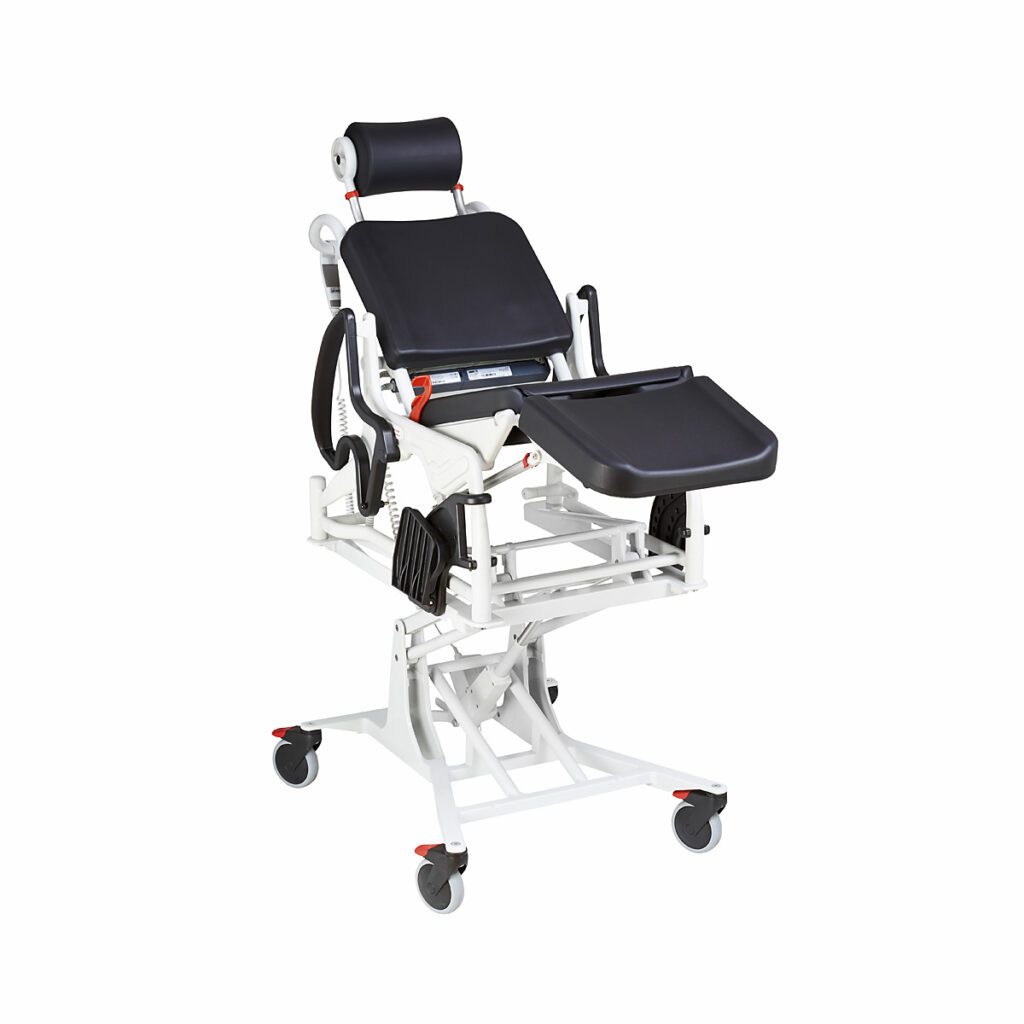
A commode is a chair with a toilet seat and a removable pan or bucket. A bedside commode stays in the bedroom so the person does not have to walk to the bathroom at night: the Rebotec Koln has swing-open armrests for side transfers and a removable pail, and the 2 in 1 bedside commode doubles as an over toilet aid. A mobile shower commode runs on castors, so a carer can wheel the person over the toilet and then into the shower without a second transfer; the Juvo models have swingback arms for side transfers, and some are self-propelled. For people with limited sitting posture, a tilt in space commode such as the Rebotec Phoenix tilts and reclines to a semi-supine 130 degrees, which gives carers better access for washing and helps transfers with patient hoists.
Swivel bath seats and wall seats
If the only shower is over a bath, a swivel bath seat sits across it: the Swan model locks in both the transfer and bathing positions and adjusts in width to suit most baths. Sitting on the edge and sliding across is what the bath boards and transfer benches range is for. Where floor space is tight, a drop down shower seat folds up against the wall when not in use, and its description says it must be installed by a qualified tradesperson.
Which shower seat suits which person?
Start with what happens in the shower now. If the person can stand to wash but tires quickly, or feels unsteady reaching down to their feet, a stool may be enough. If they lean, slump or tire when sitting upright, or need a carer’s help to sit down and stand up, a chair with a back and arms gives more support. Healthdirect advice on falls lists non-slip mats in wet areas and handrails or a seat in the shower among ways to reduce slipping at home, so a seat is often paired with grab rails fixed near it. Our guide to fall prevention equipment covers the rest of the house.
The commode vs shower chair decision is mostly about the toilet and the transfer. If the person only needs to sit to wash, a shower chair is lighter, simpler and easier to store. If they also need help with toileting, or moving between rooms is the hard part, a commode can do both jobs; the Rebotec Boston wide commode chair, for example, is described as suitable beside the bed, over a toilet and in the shower.
A stool gives a rest, a chair gives support, and a commode gives a toilet as well as a seat.
Shower chair sizes: what to measure and compare
Measure the person and the bathroom first. These figures from the range show how much models differ:
- Seat height: the person should be able to sit and stand with their feet flat on the floor. Standard shower chairs adjust from about 400 mm to 560 mm, the extra wide chair from 470 mm to 640 mm, and the padded shower stools sit higher, from 520 mm to 670 mm. Some mobile commodes have a fixed seat: Juvo models with swingaway legrests sit at 565 mm, while the Juvo tilt in space models adjust from 510 mm to 660 mm.
- Seat width: measure the person’s hips while seated and compare that with the listed width between the arms. Listed widths run from 380 mm on the armless stool, which has side handles, to 500 mm on the wide chair, with the folding chair at 430 mm. Juvo commodes come in seat widths from 460 mm to 660 mm, and swivel bath seats have seats of 410 mm to 450 mm.
- Maximum user weight: choose a seat rated above the person’s weight. The folding chair is rated to 100 kg, most standard chairs and stools to 125 kg, the Rebotec Verona round stool to 175 kg, the aluminium chair to 200 kg and the extra wide chair to 300 kg.
- Footprint in the recess: measure the shower recess, any step or hob, and the doorway. Standard shower chairs have a 560 mm by 560 mm base, the shower stools a narrower 550 mm by 380 mm, and the folding chair 550 mm by 470 mm. A Juvo commode is 540 mm to 860 mm wide overall, so check the path from the bedroom too.
- Storage and travel: the folding shower chair folds for transport or small bathrooms, and a Rebotec shower stool travel bag is in the bathroom accessories range.
Treat the figures in this shower chair buying guide as a first filter, then read each shortlisted description in full: some list extras, such as seat height extensions for swivel bath seats.
Shower chairs, stools, commodes and NDIS funding
The type of seat can change the paperwork. The NDIS gives a shower stool as an example of low-risk assistive technology, while complex bathing and toileting devices count as higher-risk assistive technology and need written advice before buying. Shower chairs appear in its list of low-cost assistive technology, which means items under $1,500, while mobile shower chairs are one of its examples of mid-cost assistive technology, which needs a recommendation from an assistive technology advisor.
The National Disability Insurance Agency (NDIA) decides what is funded, so check your plan before you order. Our guide to buying aids with NDIS funding explains the steps, and the NDIS information page covers how Allcare works with participants.
Measured the bathroom? Call with the numbers and ask which seats fit it.
Frequently Asked Questions
Can one chair work as a commode and a shower chair?
Yes, several do. The Rebotec Lyon height adjustable commode chair is described as usable as a freestanding commode, an over-toilet frame or a standalone shower chair. The Rebotec Nizza takes a different approach, with adaptable arm and back supports so it can be set up as a stool or a chair. Check that the model suits the bathroom layout before choosing.
Are there shower commodes for children and smaller adults?
Yes. The Rebotec Augsburg shower commode chair for children has a soft seat and backrest, swinging armrests and a height adjustable footrest. The Rebotec Bremen shower commode chair is made for small adults, with a cushioned seat and swing-up armrests for side transfers.
Do shower stools and chairs need tools to put together?
Many do not. The Rebotec Verona and Rebotec Monaco shower stools are both described as assembled without tools, and the Rebotec Nizza shower chair comes flat packed for easy assembly. Each product description says how it is supplied, so check before delivery day.
Can I see shower chairs and commodes before choosing?
The Liverpool showroom is at Shop 7 inside Northumberland Arcade, 230 Northumberland Street, Liverpool. What is on display changes, so call 1300 767 777 first to ask which shower seats and commodes you can see, and take your bathroom measurements and any advice from a health professional with you.
Choosing the right shower seat
Every step in this shower chair buying guide comes back to three things: the support the person needs today, the space the bathroom gives you and the paperwork the funding asks for. When needs are changing or more complex, ask a health professional before choosing, and keep any written advice with the plan.
Related services
Come and compare shower seats at the Liverpool showroom, Shop 7 inside Northumberland Arcade, 230 Northumberland Street, Liverpool, or call 1300 767 777 first.
This guide is general information, not medical advice. Read our disclaimer.