

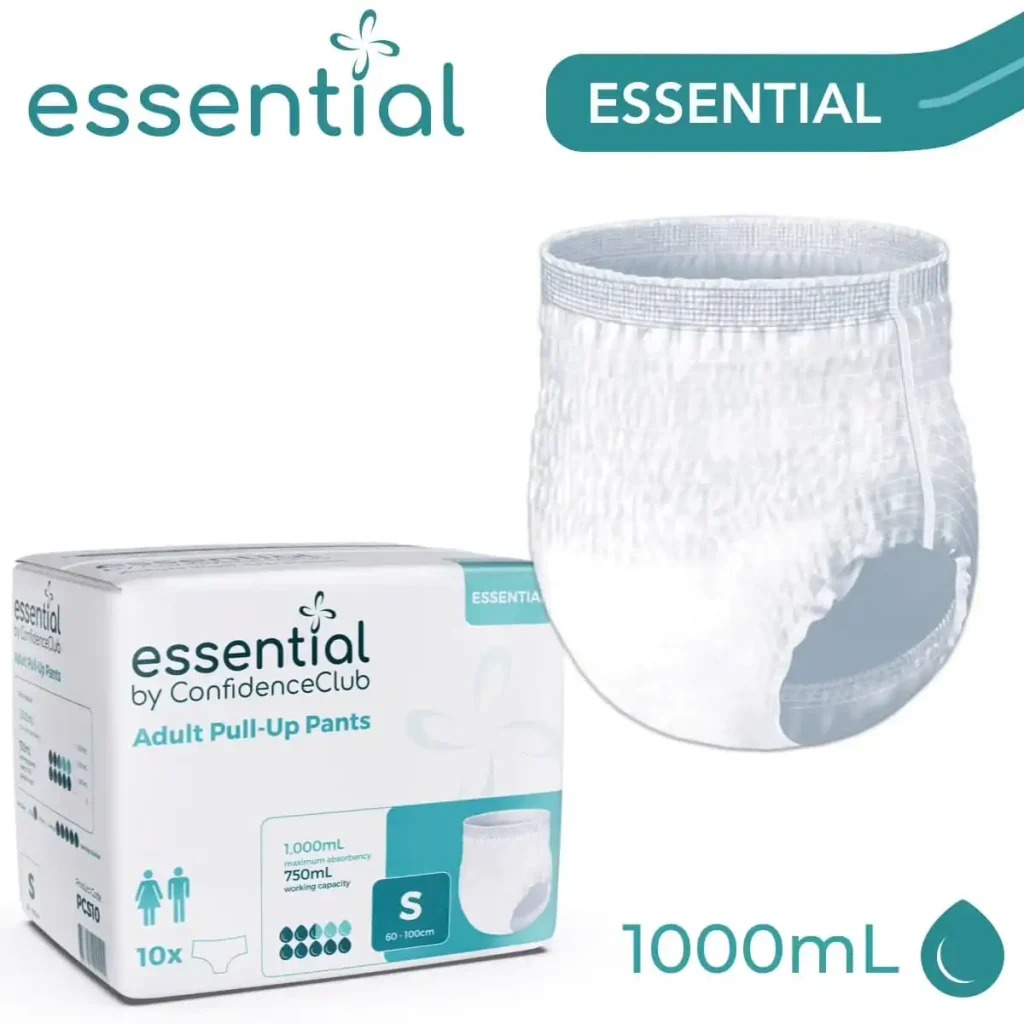
Many of the continence aids NDIS participants rely on, such as pads, pull-ups and washable bed protectors, are bought again and again, so it pays to understand how they are funded before the first order. Getting it right means knowing what a plan can cover, who can advise on the right products, and how the way a plan is managed changes who pays the provider. This guide walks through what the National Disability Insurance Scheme (NDIS) and Continence Health Australia say about continence supports, the role of a continence assessment, each plan management type, and the ordering steps with Allcare Warehouse.
Allcare Warehouse is a registered NDIS provider with a showroom in Liverpool. Its continence aids range covers adult continence products, bed and chair protection and a small kids and youth continence range, and the product details in this guide come from each listing.
Key Takeaways
- The NDIS gives continence products as an example of what the consumables category in core supports is for.
- Continence Health Australia says products may be funded when the incontinence is directly related to the disability.
- An assessment by a nurse continence specialist is part of the evidence for an NDIS application.
- NDIA-managed plans must use registered providers, while plan-managed and self-managed plans can also use unregistered ones.
- Allcare Warehouse takes orders by phone, by email or at the Liverpool showroom, with no online checkout.
Which continence aids NDIS plans can fund
An NDIS plan is split into support budgets, and core supports is the flexible one. Within it, the NDIS describes the consumables category as funding for everyday items, such as continence products. Because core supports are flexible, the total can be spread across its categories, but only on supports the NDIS rules allow and that are in line with the plan.
Funding is tied to the disability. Continence Health Australia explains that continence products and supports may be funded through the NDIS if your incontinence is directly related to your disability. When applying, it suggests working with a local area coordinator or early childhood partner to gather evidence, and including information about incontinence if it relates to the disability.
Low-cost continence equipment
Some continence supports are equipment rather than consumables. The NDIS defines low-cost assistive technology as items costing less than $1,500 that do not need to be custom-made, and its own examples include incontinence alarms. These items can be bought with the consumables budget, but the NDIS asks you to tell it what types you might need so they can be included in the plan. Each item still has to relate directly to the disability, help with your goals, be safe to use and be supported by evidence, such as a recommendation from an allied health professional.
Getting a continence assessment
Continence Health Australia notes that an NDIS application will also need an assessment by a nurse continence specialist. A continence assessment looks at the person, not only the product. Continence Health Australia’s disability guidance says the right products depend on how well the person can grasp and reach, their body shape and size, how much urine or faeces they lose, and how much help they need from a carer or support worker. A care plan might also include scheduled toilet times and a choice between washable and disposable products.
Those factors usually point to a style: pads and liners worn inside underwear, pull-ups put on like ordinary underwear, or all-in-one briefs that fasten with side tabs and can be fitted while the person is lying down. Ask for the recommendation in writing, naming the product type, the size and roughly how many are used each day, so the order can match it. Allcare Warehouse does not carry out assessments, so arrange this with the treating team before you order.
The plan decides who pays, the assessment decides what fits, and a good record makes every reorder easier.
How plan management changes the way you order
The way a plan is managed decides which providers you can use, who pays them and who keeps the paperwork:
- NDIA-managed: you choose your providers, but they must be registered, and the provider makes a claim against the plan in the provider portal.
- Plan-managed: a plan manager keeps records and uses the NDIS portals to pay providers from the plan, and you can choose registered or unregistered providers.
- Self-managed: you or your nominee pay providers directly, keep the invoices and receipts as evidence, and can also use registered or unregistered providers.
Whichever applies, say at the start of the order how the plan is managed and, for plan management, who the plan manager is. Because these products are reordered often, keep a simple record of sizes, quantities and dates so you can see how much of the budget each order uses.
Ordering continence aids from Allcare Warehouse
Whatever the plan type, ordering the continence aids NDIS plans pay for starts the same way. Products are listed without prices and there is no online cart, so you call 1300 767 777, email [email protected] or visit the Liverpool showroom. The how to order page sets out each step. Before you get in touch, have these ready:
- the product name as it appears on the listing, and the size, measured rather than guessed
- how many packs you need, based on daily use
- the plan management type, and any written advice from the continence nurse or GP
- whether you want delivery or pick-up
Allcare delivers Sydney wide, freight can be arranged within NSW, and products are listed as available for delivery Australia wide. The delivery and pick-up page has the details. If you are still deciding on a style, our comparison of pads, pull-ups and all-in-ones explains how each is worn, and the guide to overnight incontinence pads covers night-time use.
Children and young people
Continence Health Australia notes that children with disability may have challenges or delays around toilet learning, and that seeking advice and support early can really help. The kids and youth range includes iD Comfy Junior Pants in two age bands, 4 to 7 years (17 to 27 kg) and 8 to 15 years (24 to 47 kg), an iD Comfy Junior XS slip for waists of 40 to 70 cm, and the Kylie Kids washable bed protector with a dinosaur design.
Sorting out continence products for an NDIS plan? Talk to the team about sizes, styles and quantities.
Frequently Asked Questions
Can I get CAPS as well as NDIS funding for continence products?
Generally not. Continence Health Australia says that if you have continence supports funded in your NDIS plan, you won’t generally be eligible for the Continence Aids Payment Scheme (CAPS), an annual Australian Government subsidy for continence products. If the plan has no continence supports, it may be worth asking whether CAPS applies to you.
How do I find a nurse continence specialist?
Call the National Continence Helpline on 1800 33 00 66. It is a free, confidential service staffed by nurse continence specialists, open Monday to Friday from 8am to 8pm AEST/AEDT, and it can help you find a continence service near you. Continence Health Australia also keeps an online service provider directory you can search by area.
Do I need quotes or approval for low-cost continence equipment?
Usually not. NDIS guidance says that when assistive technology costs less than $1,500 and is a low-risk item, you don’t need to give it quotes, evidence or assessments, and you don’t need to ask for approval before you buy. It still suggests getting advice before buying, even for low-cost items, to make sure the item is right for you.
Can I change how my plan is managed?
Yes. The NDIS says you can ask to change your plan management type at any time, and if you want to self-manage there is no limit on how often you can request the change. Talk to your NDIS contact. Let your suppliers know when it happens, because the change affects who pays them.
Is incontinence more common for people with disability?
Yes. According to Continence Health Australia, people who have challenges with thinking skills, moving their body or how their brain and nerves work are more likely to experience incontinence. It names conditions such as cerebral palsy, Down syndrome, autism, spinal cord injury and intellectual disability, and notes that constipation can make bladder or bowel problems worse.
Lining up the plan and the order
Getting the continence aids NDIS participants need comes down to three things working together: the evidence, the plan and the order. When fit, comfort or leaks change, go back to the continence nurse before switching products, and update the written advice so the next order reflects it.
Related services
Order continence aids by calling 1300 767 777, or bring your plan details to the Liverpool showroom at Shop 7 inside Northumberland Arcade, 230 Northumberland Street, Liverpool.
This guide is general information, not medical advice. Read our disclaimer.