

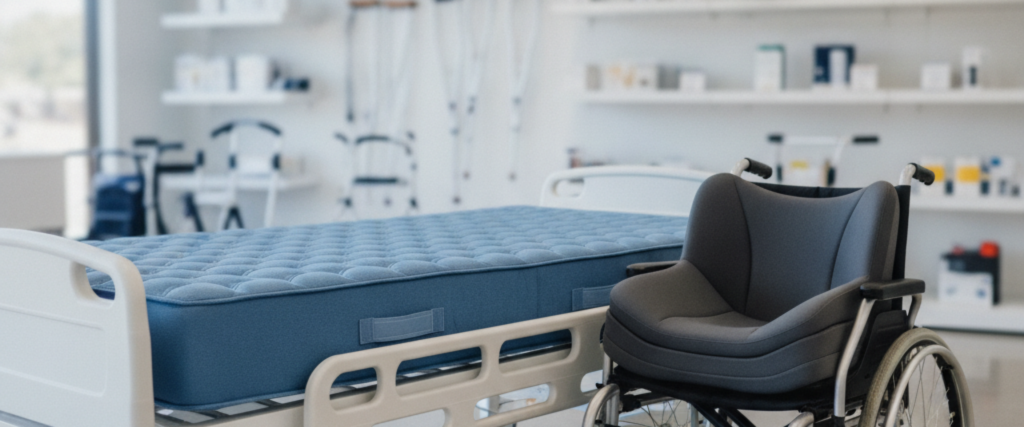
Choosing the right pressure care cushions and mattresses is a critical decision for NDIS participants, aged care residents, and their carers. Effective pressure care equipment can significantly improve comfort, enhance quality of life, and most importantly, prevent pressure injuries. This guide from Allcare Warehouse in Croydon Park, NSW, will help you understand the different types of pressure care solutions available, how to assess risk, and what to consider when selecting equipment, including how it aligns with NDIS funding. Discover how the right pressure care cushions and mattresses can make a significant difference to daily living.
Key Takeaways
- Pressure care cushions and mattresses prevent pressure injuries by redistributing weight and reducing shear forces.
- Risk assessment, user mobility, and skin integrity are crucial factors in selecting the appropriate equipment.
- Different materials like foam, air, and gel offer varied levels of pressure redistribution and support.
- NDIS funding may cover pressure care equipment as assistive technology, requiring appropriate assessment and quotes.
- Proper sizing, maintenance, and regular re-assessment ensure ongoing effectiveness and comfort.
Understanding Pressure Injuries and Prevention
Pressure injuries, also known as bedsores or pressure ulcers, are localised damage to the skin and underlying tissue. They typically occur over bony prominences as a result of sustained pressure, shear, or friction. For individuals with limited mobility, sensory impairment, or other health conditions, preventing these injuries is paramount. Pressure care cushions and mattresses are specifically designed to mitigate these risks by distributing pressure evenly across a larger surface area, reducing the intensity of pressure on vulnerable spots.
The goal of pressure care equipment is to maintain good blood flow to the skin and tissues, which is essential for healthy skin. When blood flow is restricted for too long, cells can become damaged and die, leading to an injury. These injuries can range from mild skin redness to severe tissue damage, often requiring extensive medical intervention. Proactive use of appropriate equipment is always more effective than treating an existing injury.
The Role of Pressure Redistribution
Pressure redistribution is the primary mechanism by which these products work. Instead of a single point bearing the majority of the body’s weight, the surface conforms to the body, spreading the load. This reduces the peak pressure points, which are most susceptible to injury. Additionally, many modern pressure care solutions address shear forces – the parallel stress exerted on the skin when it moves against a surface, such as sliding down in a chair or bed. Reducing shear is just as important as reducing direct pressure in preventing tissue damage.
Assessing Pressure Injury Risk and Needs
Before selecting any pressure care cushions and mattresses, a thorough assessment of the individual’s risk for pressure injuries is essential. This assessment should ideally be conducted by a healthcare professional, such as an Occupational Therapist (OT) or a registered nurse. Factors considered in a comprehensive risk assessment include:
- Mobility Level: How often and easily can the individual change position independently?
- Skin Integrity: Are there existing pressure injuries, redness, or areas of compromised skin?
- Sensory Perception: Can the individual feel discomfort or pressure effectively?
- Nutritional Status: Poor nutrition can weaken skin and tissue, increasing vulnerability.
- Continence Management: Moisture from incontinence can macerate skin, making it more fragile.
- Medical Conditions: Diabetes, circulatory issues, and neurological conditions can impact skin health.
The outcome of this assessment will guide the choice of equipment, determining the level of pressure redistribution required. For example, someone with very limited mobility and poor skin integrity will need a higher level of pressure care than someone who can independently reposition frequently.
The right pressure care equipment can significantly improve the lives of NDIS participants, enhancing comfort and preventing debilitating pressure injuries. An OT assessment is the first crucial step to ensure the equipment perfectly matches individual needs.
Types of Pressure Care Mattresses
Pressure care mattresses are designed for use on beds and come in various types, each offering different levels of pressure redistribution and support. Selecting the correct mattress depends on the individual’s risk level and specific needs.
Static Mattresses (Low to Medium Risk)
Static mattresses, often made from specialised foam or gel, provide continuous pressure redistribution without moving parts. They are suitable for individuals at low to medium risk of pressure injuries who can still reposition themselves to some extent or are frequently assisted by carers.
- Foam Mattresses: These use multi-layered foams with different densities to cradle the body and distribute weight. Some feature castellated or convoluted foam designs to increase surface area and airflow. They are generally comfortable, durable, and relatively low maintenance.
- Gel Mattresses: Incorporate gel sections or layers within foam to provide additional pressure relief and cooling properties. Gel conforms well to the body, offering excellent immersion and envelopment.
Dynamic Mattresses (Medium to High Risk)
Dynamic mattresses, also known as alternating air mattresses, feature a system of air cells that inflate and deflate in a cycle, constantly changing the pressure points on the body. This provides active pressure relief and stimulates blood flow, making them ideal for individuals at medium to high risk, or those with existing pressure injuries.
- Alternating Air Mattresses: These are powered by a pump that cycles air through different sections of the mattress. They are highly effective for preventing and managing severe pressure injuries. Different models offer varying cycle times, cell heights, and features like pulsation or static mode.
- Low Air Loss Mattresses: These systems circulate a small amount of air over the skin surface to reduce heat and moisture, which are contributing factors to skin breakdown. They often combine alternating pressure with microclimate management.
Best Pressure Care Cushions and Mattresses
Just as important as mattresses, pressure care cushions are essential for individuals who spend significant time seated in wheelchairs, commode chairs, or recliners. Prolonged sitting can create high-pressure areas on the buttocks and sacrum, making a suitable cushion vital.
Foam Cushions (Low to Medium Risk)
Foam cushions are a common choice for basic pressure relief. They come in various densities and contours to support posture and distribute weight. High-density, multi-layered, or contoured foams are more effective than standard foam for pressure care.
- Contoured Foam Cushions: Designed with specific shapes to support anatomical curves, reduce sliding, and distribute pressure away from bony prominences.
- Viscoelastic Foam (Memory Foam) Cushions: These conform to the body’s shape, offering good immersion and pressure distribution. They can be sensitive to temperature, becoming firmer in colder environments.
Gel Cushions (Medium Risk)
Gel cushions often combine a gel layer with a foam base. The gel provides excellent fluid-like pressure redistribution, moulding to the user’s shape. They can also offer a cooling sensation, which is beneficial for skin health.
- Fluid Gel Cushions: These cushions use a gel bladder to distribute pressure. They are effective for individuals who need moderate pressure relief and can help regulate skin temperature.
Air Cushions (Medium to High Risk)
Air cushions consist of interconnected air cells that can be individually adjusted to match the user’s contours. This customisation provides superior pressure redistribution and immersion, making them highly effective for high-risk individuals or those with existing pressure injuries.
- Cellular Air Cushions: Feature multiple air cells that can be inflated or deflated to achieve optimal pressure distribution and stability. They require careful initial setup and regular checks to maintain correct inflation.
Ready to Explore Pressure Care Solutions?
Contact Allcare Warehouse to discuss your pressure care needs and get expert advice.
Sizing, Fit, and Maintenance
The effectiveness of any pressure care cushion or mattress largely depends on its correct sizing and fit. An ill-fitting cushion or mattress can create new pressure points or fail to provide adequate support, negating its purpose.
- Cushion Sizing: A cushion should match the dimensions of the wheelchair or seating surface. It should not be too wide or too narrow, and its depth should be appropriate for the user’s weight and leg length.
- Mattress Sizing: Mattresses must fit the bed frame correctly, without gaps or overhangs. Ensure the mattress is compatible with any adjustable bed features, such as profiling or tilt functions.
- Weight Capacity: Always check the weight capacity of the equipment. Using a product with an insufficient weight capacity can compromise its effectiveness and durability.
- Covers: Most pressure care products come with breathable, waterproof, and washable covers. These are crucial for hygiene and protecting the internal components. Ensure covers are kept clean and in good repair.
- Maintenance: Follow manufacturer guidelines for cleaning, inflation checks (for air systems), and general care. Regular inspection for wear and tear is vital to ensure the equipment remains effective and safe.
Regular re-assessment by an OT or healthcare professional is also important, as an individual’s needs can change over time due to changes in mobility, weight, or skin condition.
NDIS Funding for Pressure Care Equipment
For NDIS participants, pressure care cushions and mattresses are typically funded under Assistive Technology (AT) in their NDIS plan. Assistive Technology refers to equipment, technology, or devices that help people with disability live more independently and safely.
To access NDIS funding for pressure care equipment, participants will generally need:
- Assessment by an Allied Health Professional: An Occupational Therapist (OT) or Physiotherapist will assess the participant’s needs, current functional abilities, and risk of pressure injuries. They will recommend specific equipment that is ‘reasonable and necessary’ to meet the participant’s goals.
- Justification Report: The allied health professional will write a report justifying the need for the recommended equipment, explaining how it will help the participant achieve their NDIS goals and prevent further injury.
- Quotes: Participants will need to obtain quotes for the recommended equipment from NDIS-registered providers like Allcare Warehouse. It’s often advisable to get multiple quotes for comparison.
- Plan Management: Depending on how your NDIS plan is managed (self-managed, plan-managed, or NDIA-managed), the process for submitting reports and quotes will vary. Allcare Warehouse can assist with providing NDIS-compliant quotes and invoices for plan-managed and self-managed participants.
It’s important to understand that the NDIS funds equipment that directly relates to a participant’s disability and helps them achieve their goals, such as maintaining skin integrity, participating in daily activities, or improving comfort. Consumables like cleaning supplies for the equipment are generally not covered as AT but may fall under other NDIS budget categories.
Why Choose Allcare Warehouse for Pressure Care Solutions?
At Allcare Warehouse, we understand the critical role that quality pressure care cushions and mattresses play in the health and well-being of NDIS participants and aged care residents. Based in Croydon Park, NSW, we are an NDIS-registered supplier committed to providing a comprehensive range of assistive technology and daily living aids across Sydney metro and Australia-wide.
Our team offers expert guidance to help you navigate the options, ensuring you select equipment that perfectly matches the user’s risk level, comfort needs, and NDIS plan requirements. We work closely with OTs, support coordinators, and families to streamline the process of acquiring essential equipment, from initial enquiry to final delivery.
We pride ourselves on offering a diverse selection of high-quality pressure care products from reputable manufacturers, ensuring durability, effectiveness, and compliance with Australian standards. Our goal is to empower individuals to live more independently and comfortably, with the peace of mind that comes from superior pressure injury prevention.
For further information, see National Disability Insurance Scheme and business.gov.au.
Frequently Asked Questions
What is the main difference between static and dynamic pressure care mattresses?
Static mattresses provide continuous pressure redistribution using materials like foam or gel, suitable for low to medium-risk individuals. Dynamic (alternating air) mattresses actively change pressure points through inflating and deflating air cells, offering superior relief for medium to high-risk users or those with existing pressure injuries.
How often should pressure care equipment be replaced?
The lifespan of pressure care equipment varies depending on the type, usage, and quality. Foam mattresses and cushions typically last 3-5 years, while dynamic air systems may last longer with proper maintenance of the pump and cells. Regular inspection for wear, tear, and loss of effectiveness is crucial, and replacement should be considered when the product no longer provides adequate pressure relief or becomes uncomfortable.
Can an NDIS participant get a pressure care cushion for a standard chair?
Yes, if an Occupational Therapist assesses and justifies the need for a pressure care cushion for a standard chair (e.g., dining chair, lounge chair) to prevent pressure injuries and support the participant’s daily activities, it can be funded under Assistive Technology. The key is the “reasonable and necessary” criteria, demonstrating how the equipment helps achieve NDIS goals.
Is an Occupational Therapist assessment always required for NDIS funding of pressure care equipment?
For most complex or higher-value assistive technology like pressure care mattresses and specialised cushions, an assessment and report from an Occupational Therapist or other relevant allied health professional is generally required by the NDIS. This ensures the equipment is appropriate for the participant’s specific needs and provides the necessary evidence for funding approval.
What features should I look for in a pressure care mattress cover?
Look for covers that are multi-stretch, breathable, waterproof, and machine washable. A multi-stretch cover reduces shear forces on the skin, while breathability helps manage skin temperature and moisture. Waterproofing protects the mattress from spills and incontinence, and washability ensures good hygiene. Zippers should be well-covered to prevent skin irritation.
Visit Allcare Warehouse Today
For expert advice and a wide range of pressure care cushions and mattresses, visit our showroom in Croydon Park, NSW, or contact us for Australia-wide delivery.